


Day 21 – The Romans Invented Apartment Living

Did You Know? Italy

Insula - Multi-Story Apartment Building in Ancient Rome

Think apartment buildings are a modern invention? Think again!

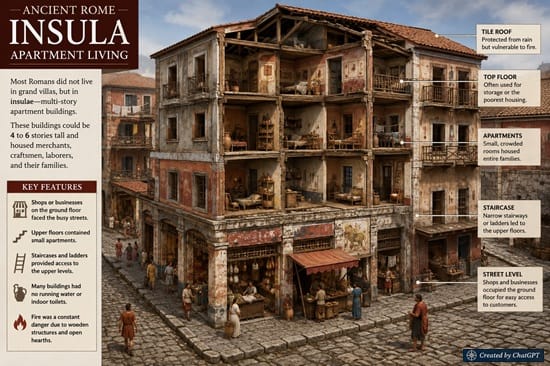
As Rome’s population exploded to more than one million people during the height of the Empire, housing became a challenge. The solution was the insula, a multi-story apartment building that housed the majority of Rome’s citizens.

The wealthiest Romans lived in spacious homes called domus, while ordinary families rented apartments that ranged from comfortable lower floors to cramped upper stories. Some insulae rose as high as six or seven stories, making Ancient Rome home to some of the world’s first urban apartment complexes.

Insulae varied in design, but all had similar features. Usually, the bottom level was used for the tabernae, shops that sold goods and services. A narrow passageway led from the street to the interior, where staircases led to the upper levels. Lower floors had more features and were more desirable. Construction was sturdier and came with more amenities, making them more expensive. The higher up you went, the smaller and cheaper the apartments became. Unfortunately, it made them riskier, as you did not have much time to escape during fires. Water had to be carried in from local sources as insulae did not have a connection to the aqueducts.

Although many were built of brick, concrete, and timber, fires and collapses were common, prompting Roman emperors to create some of history’s earliest building regulations. Augustus implemented a height restriction of 21 meters (approximately 70 feet). Trajan implemented even more restrictions following the Great Fire of Rome in 64 AD. Even with restrictions, Ancient Rome still faced many of the same problems that plague modern-day cities: corruption and lack of law enforcement.

Related Articles:
Did You Know? Italy

Join us every day as we explore a fascinating fact, untold story, or remarkable piece of Italy’s history and culture. Whether your family came from Italy, you’ve traveled there, or you dream of visiting one day, this year-long journey is your daily passport to the heart of Italy. You can follow us on Facebook, Instagram or X (formerly Twitter). You can subscribe for free by filling out the form below to get it sent to your email.
Did You Know? Italy - 365 Days of Discovery!

Enter your email address to subscribe to this blog and receive notifications of new posts by email.

Join 4,455 other subscribers

Day 20 – Latin Never Really Disappeared

Did You Know? Italy

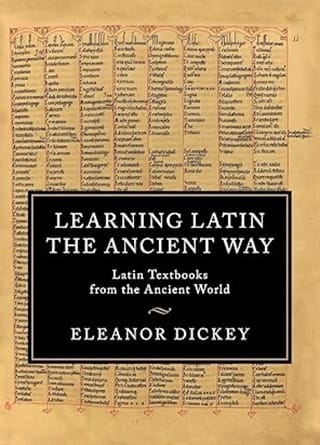
Learning Latin the Ancient Way book

Although no one speaks Latin as an everyday language anymore, it’s far from extinct.

It is one of the official languages of the Holy See. It is used in papal documents, official communications, and liturgical ceremonies. You can find over a million books and manuscripts in Latin at the Vatican Library.

Italian, Spanish, French, Portuguese, and Romanian all evolved directly from Latin. Even English contains thousands of Latin-derived words, especially in science, law, medicine, and government.

Walk through Rome today and you’ll still see Latin inscriptions carved into churches, monuments, and public buildings—silent reminders of an empire whose language helped shape the modern world.

In many ways, every time we use words like video, animal, or formula, we’re speaking a little Latin.

Question: Can you think of a Latin word or phrase that you still hear today?

Related Articles:

Did You Know? Italy

Join us every day as we explore a fascinating fact, untold story, or remarkable piece of Italy’s history and culture. Whether your family came from Italy, you’ve traveled there, or you dream of visiting one day, this year-long journey is your daily passport to the heart of Italy. You can follow us on Facebook, Instagram or X (formerly Twitter). You can subscribe for free by filling out the form below to get it sent to your email.
Did You Know? Italy - 365 Days of Discovery!

Enter your email address to subscribe to this blog and receive notifications of new posts by email.

Join 4,455 other subscribers

Day 19 – Why Do We Still Use Roman Numerals?

Did You Know? Italy

Roman numerals chart

Even though they were created over 2,000 years ago, Roman numerals are still all around us.

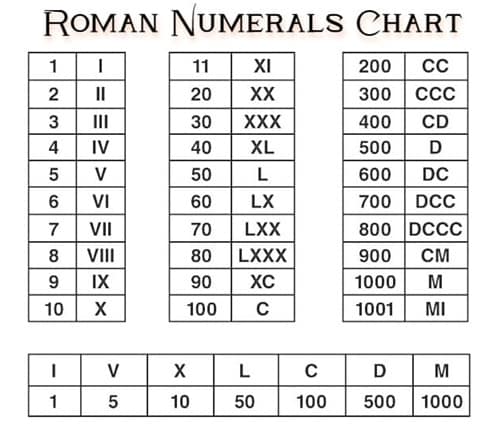
You’ll find them on clocks, in book chapters, in movie sequels, at sporting events like the Super Bowl, on monuments, and in official documents. The system uses letters such as I (one), V (five), X (ten), L (fifty), C (one hundred), D (five hundred), and M (one thousand) to represent numbers. The year 2026 would be MMXXVI. If you place a smaller Roman numeral in front of a larger one, you would subtract it. The number nine in Roman numerals would be IX. If you place a smaller Roman numeral after a larger one, you would add it. The number six in Roman numerals would be XI.

Although modern mathematics relies on Arabic numerals, Roman numerals continue to symbolize tradition, prestige, and timeless design.

It’s another reminder that the influence of Ancient Rome is woven into our everyday lives.

Question: Where was the last place you noticed Roman numerals?

Related Articles:

Did You Know? Italy

Join us every day as we explore a fascinating fact, untold story, or remarkable piece of Italy’s history and culture. Whether your family came from Italy, you’ve traveled there, or you dream of visiting one day, this year-long journey is your daily passport to the heart of Italy. You can follow us on Facebook, Instagram or X (formerly Twitter). You can subscribe for free by filling out the form below to get it sent to your email.
Did You Know? Italy - 365 Days of Discovery!

Enter your email address to subscribe to this blog and receive notifications of new posts by email.

Join 4,455 other subscribers

Day 18 – Ancient Romans Loved Their Food

Did You Know? Italy

Day 18 – Ancient Romans Loved Their Food

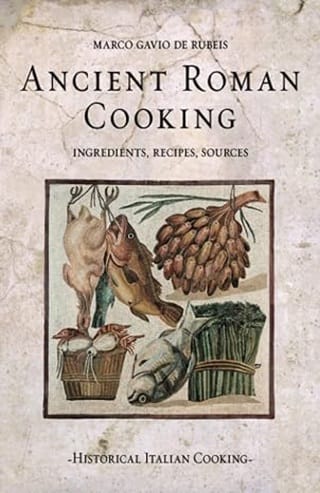
Ancient Roman Cooking recipe book

Think Italians are passionate about food today? That tradition stretches back thousands of years.

Ancient Romans enjoyed bread, olives, cheese, seafood, fruits, vegetables, and plenty of wine. Wealthy families hosted elaborate banquets featuring exotic dishes from across the empire, while ordinary citizens often enjoyed simple but hearty meals made from fresh local ingredients.

The first meal of the day was called ientaculum. The main meal was during the early afternoon, called cena. A light supper at night was called vesperna.

One of Rome’s most famous seasonings was garum, a fermented fish sauce used much like modern Italians use olive oil or grated cheese. While it may sound unusual today, it was considered an essential ingredient in countless Roman recipes.

Food has always been at the heart of Italian life.

Would you be brave enough to try ancient Roman garum?

Related Articles:

Did You Know? Italy

Join us every day as we explore a fascinating fact, untold story, or remarkable piece of Italy’s history and culture. Whether your family came from Italy, you’ve traveled there, or you dream of visiting one day, this year-long journey is your daily passport to the heart of Italy. You can follow us on Facebook, Instagram or X (formerly Twitter). You can subscribe for free by filling out the form below to get it sent to your email.
Did You Know? Italy - 365 Days of Discovery!

Enter your email address to subscribe to this blog and receive notifications of new posts by email.

Join 4,455 other subscribers

Day 17 – Augustus Changed Rome Forever

Did You Know? Italy

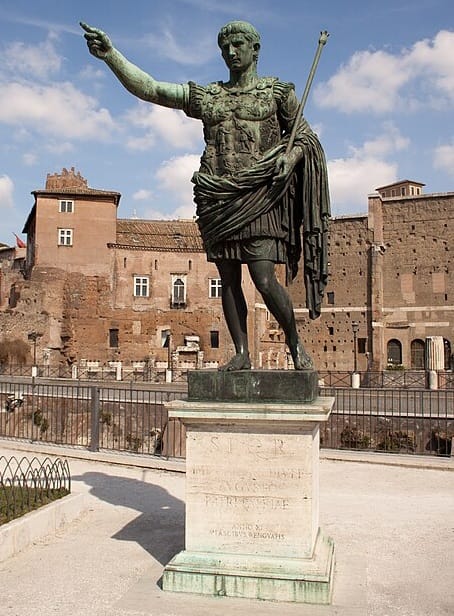
Augustus Statue

Although Julius Caesar is one of history’s most famous Romans, it was his adopted son Augustus who transformed Rome forever.

After years of civil war, Augustus became Rome’s first emperor in 27 BC. He did not rule with fear, as he once said: “The greatest ruler is one who is obeyed without being feared.” He ushered in two centuries of peace known as the Pax Romana. He did not rule as a dictator; instead, he transitioned to the Principate system. He created the first public firefighting and police force. Formed an elite army known as the Praetorian Guard, used to protect the head of state and key installations. He built and restored temples, expanded roads, and constructed the Forum of Augustus and the Altar of Peace. Augustus boasted, “found Rome a city of bricks and left it a city of marble.”

Under Augustus, Rome grew into one of the world’s greatest cities, and his leadership laid the foundation for an empire that would influence civilization for centuries.

Many historians consider Augustus to be the greatest leader Rome ever produced.

Related Articles:

Did You Know? Italy

Join us every day as we explore a fascinating fact, untold story, or remarkable piece of Italy’s history and culture. Whether your family came from Italy, you’ve traveled there, or you dream of visiting one day, this year-long journey is your daily passport to the heart of Italy. You can follow us on Facebook, Instagram or X (formerly Twitter). You can subscribe for free by filling out the form below to get it sent to your email.
Did You Know? Italy - 365 Days of Discovery!

Enter your email address to subscribe to this blog and receive notifications of new posts by email.

Join 4,455 other subscribers

Day 16 – What Does SPQR Really Mean?

Did You Know? Italy

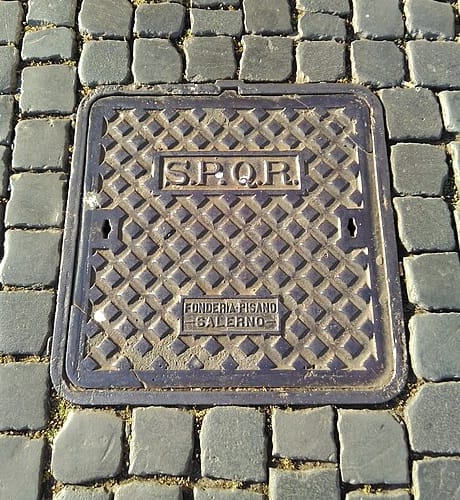
SPQR manhole cover in Rome

If you’ve ever walked through Rome, you’ve probably noticed the letters SPQR engraved on manhole covers, fountains, buildings, and monuments. But what does it represent?

SPQR stands for Senatus Populusque Romanus, or “The Senate and the People of Rome.” It was the official emblem of the Roman Republic and later the Roman Empire, symbolizing the partnership between the Roman government and its citizens.

For over 2,000 years, these four letters have represented Roman pride, strength, and civic identity. Even today, SPQR remains the official symbol of the city of Rome, connecting modern Italy to its incredible ancient past.

Related Articles:

Did You Know? Italy

Join us every day as we explore a fascinating fact, untold story, or remarkable piece of Italy’s history and culture. Whether your family came from Italy, you’ve traveled there, or you dream of visiting one day, this year-long journey is your daily passport to the heart of Italy. You can follow us on Facebook, Instagram or X (formerly Twitter). You can subscribe for free by filling out the form below to get it sent to your email.
Did You Know? Italy - 365 Days of Discovery!

Enter your email address to subscribe to this blog and receive notifications of new posts by email.

Join 4,455 other subscribers

Day 15 – Roman Baths Were the Original Community Centers

Did You Know? Italy

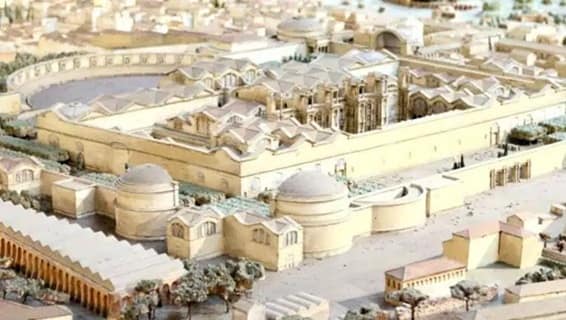
Model of a Roman Bath

Ancient Roman bathhouses were much more than places to get clean—they were the social hubs of everyday life.

Visitors could exercise, swim, read in libraries, stroll through gardens, enjoy a massage, meet friends, conduct business, or relax after a long day. There were typically two types of baths. The balneae (smaller baths) were privately owned or small neighborhood bathhouses. The thermae (imperial baths) were massive state-funded complexes built by emperors. They could handle thousands of people every day. These included libraries, gardens, lecture halls, and gymnasiums. Of the eleven imperial thermae the three largest were Diocletian, Caracalla and Trajan.

Thanks to Rome’s incredible aqueduct system, fresh water continuously flowed through both heated and cold pools, creating an experience that would rival that of many modern spas.

For Romans, visiting the baths wasn’t considered a luxury—it was simply part of daily life.

Related Articles:

Did You Know? Italy

Join us every day as we explore a fascinating fact, untold story, or remarkable piece of Italy’s history and culture. Whether your family came from Italy, you’ve traveled there, or you dream of visiting one day, this year-long journey is your daily passport to the heart of Italy. You can follow us on Facebook, Instagram or X (formerly Twitter). You can subscribe for free by filling out the form below to get it sent to your email.
Did You Know? Italy - 365 Days of Discovery!

Enter your email address to subscribe to this blog and receive notifications of new posts by email.

Join 4,455 other subscribers

Day 14 – The Vestal Virgins Guarded Rome’s Sacred Flame

Did You Know? Italy

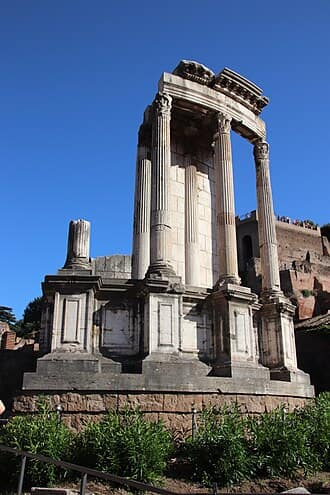
Temple of Vesta

Among the most respected women in Ancient Rome were the Vestal Virgins, priestesses dedicated to the goddess Vesta (goddess of the hearth, home, family, virginity, and sacred fire).

Chosen as young girls between the ages of six to ten, they served for thirty years, with one of their most important responsibilities being to keep Rome’s sacred fire burning. Romans believed that as long as the flame remained lit, the city would continue to prosper. If the flame extinguished, the Vestal responsible would be whipped. Any Vestal who lost her virginity was sentenced to a living burial, and the sexual partner, if found, was publicly beaten to death. Fortunately, these events did not frequently happen.

Unlike most women of the time, Vestal Virgins enjoyed remarkable privileges. They could own property, manage their own finances, and were treated with extraordinary respect throughout Roman society.

Their role combined religious devotion with immense civic importance, making them some of the most influential women in the Roman world.

The sacred flame was extinguished forever in AD 394 and the Temple was permanently closed.

Related Articles:

Did You Know? Italy

Join us every day as we explore a fascinating fact, untold story, or remarkable piece of Italy’s history and culture. Whether your family came from Italy, you’ve traveled there, or you dream of visiting one day, this year-long journey is your daily passport to the heart of Italy. You can follow us on Facebook, Instagram or X (formerly Twitter). You can subscribe for free by filling out the form below to get it sent to your email.
Did You Know? Italy - 365 Days of Discovery!

Enter your email address to subscribe to this blog and receive notifications of new posts by email.

Join 4,455 other subscribers

Day 13 – Hannibal Almost Defeated Rome

Did You Know? Italy

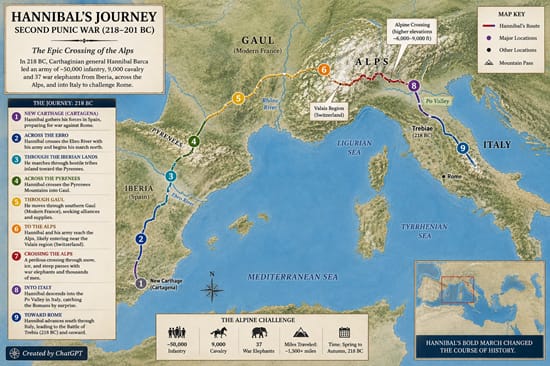
Hannibal's route through the Alps into Italy

One of Rome’s greatest enemies was the brilliant Carthaginian general Hannibal. Hannibal’s greatest strength was being able to assess his own army’s abilities as well as his opponents’ strengths and weaknesses. With this knowledge, he could plan battles accordingly.

During the Second Punic War, Hannibal shocked the ancient world by marching an army, complete with war elephants, across the snow-covered Alps into Italy. Historians still consider it one of the greatest military achievements ever attempted.

For more than fifteen years, Hannibal fought Roman armies throughout Italy, winning several stunning victories. Yet despite his brilliance, he never captured the city of Rome itself.
Rome led a counteroffensive, invading North Africa, forcing Hannibal to return home, where he was defeated in the Battle of Zama, effectively ending the war in a victory for Rome.

His daring campaign remains one of the greatest military stories in history.

Related Articles:

Did You Know? Italy

Join us every day as we explore a fascinating fact, untold story, or remarkable piece of Italy’s history and culture. Whether your family came from Italy, you’ve traveled there, or you dream of visiting one day, this year-long journey is your daily passport to the heart of Italy. You can follow us on Facebook, Instagram or X (formerly Twitter). You can subscribe for free by filling out the form below to get it sent to your email.

Did You Know? Italy - 365 Days of Discovery!

Enter your email address to subscribe to this blog and receive notifications of new posts by email.

Join 4,455 other subscribers

Day 12 – The Roman Forum Was the Center of Everything

Did You Know? Italy

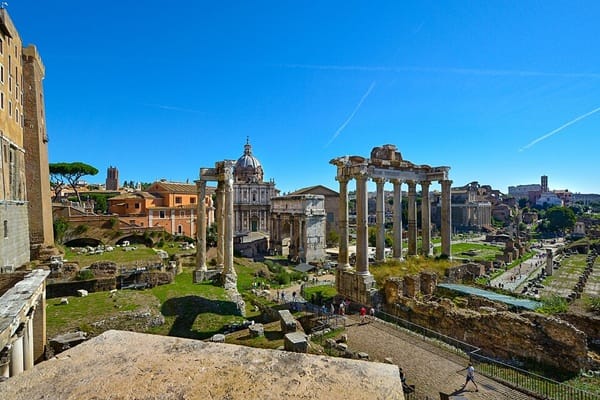
Roman Forum

Long before shopping malls, government buildings, or city squares, there was the Roman Forum (Italian: Foro Romano; Latin: Forum Romanum).

The Forum is a rectangular-shaped area in a valley between the Palatine and Capitoline Hills. It originally served as a marketplace for day-to-day shopping. Over time, it became the heart of the empire. It served as the city’s political, religious, legal, and commercial center. It was the center of day-to-day life in Rome. Senators debated laws, merchants sold their goods, generals celebrated military victories, and ordinary citizens gathered to hear speeches that shaped history. Before the Colosseum was built, it hosted gladiator matches.

In the center of Ancient Rome, the Forum was roughly 250 meters (820 feet) long by 170 meters (560 feet) wide and contained many important government and civic buildings, temples and religious sites, basilicas, and arches. Government and civic buildings consisted of the Curia Julia, Rostra, Tabularium, and Comitium. Numerous temples were located throughout the Forum: the Temple of Saturn, the Temple of Caesar, the Temple of Vesta and the House of the Vestals, the Temple of Castor and Pollux, the Temple of Antoninus and Faustina, the Temple of Concord, the Temple of Vespasian and Titus, and the Regia. In Ancient Rome, basilicas were not churches; they were public halls for administrative affairs and judicial trials. They included the Basilica Julia, Basilica Aemilia, and the Basilica of Maxentius and Constantine. At the eastern entrance to the Forum is the Arch of Titus, and at the northwestern end is the Arch of Septimius Severus.

For centuries, this bustling area was the beating heart of the Roman Republic and later the Roman Empire. Some of history’s most influential leaders—including Julius Caesar, Cicero, and Augustus—walked its streets.

Today, visitors can still stroll among the ruins and imagine the sounds of one of history’s greatest civilizations.

Related Articles:

Did You Know? Italy

Join us every day as we explore a fascinating fact, untold story, or remarkable piece of Italy’s history and culture. Whether your family came from Italy, you’ve traveled there, or you dream of visiting one day, this year-long journey is your daily passport to the heart of Italy. You can follow us on Facebook, Instagram or X (formerly Twitter). You can subscribe for free by filling out the form below to get it sent to your email.

Did You Know? Italy - 365 Days of Discovery!

Enter your email address to subscribe to this blog and receive notifications of new posts by email.

Join 4,455 other subscribers